

I.
The Visible Machine
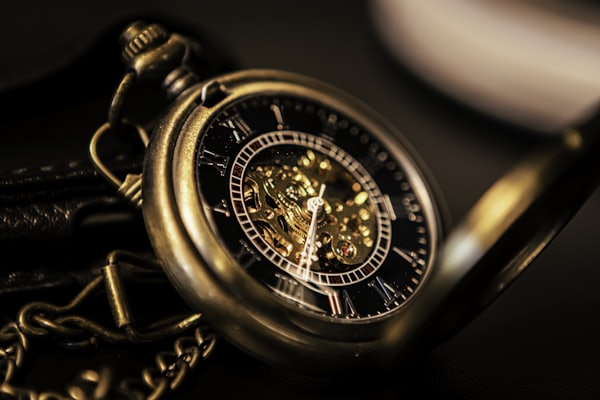
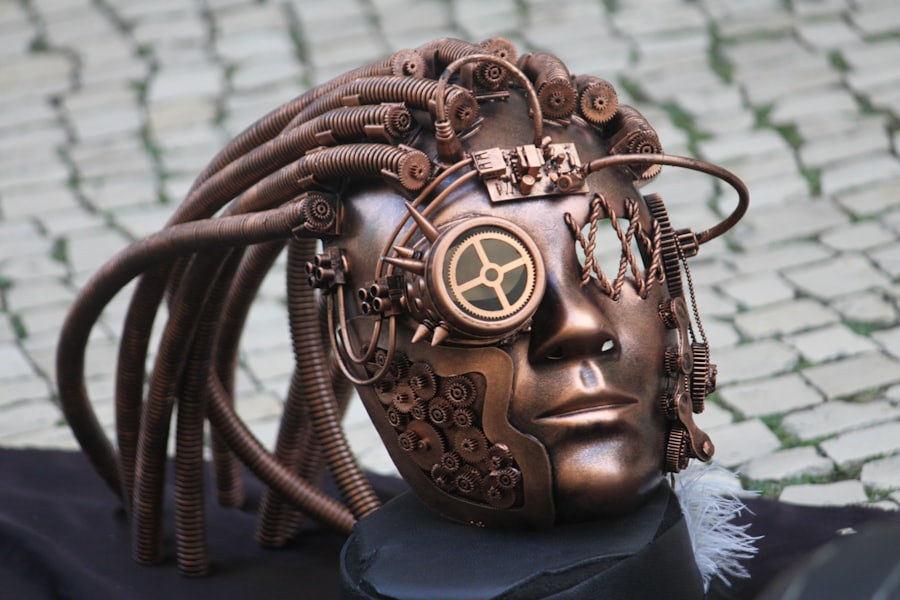
Every gear, valve and rivet is on display. Nothing is hidden in a black box. The pleasure of steampunk is the pleasure of seeing how it works.
COG · VALVE · ESCAPEMENT
Une question, une suggestion, une correction ?
Envoyez-nous un mail directement :
Nous répondons généralement sous 48h.
Steampunk is the retrofuture of the 19th century - an alternate timeline where the steam engine never gave way to the combustion motor, where the airship still rules the sky, and where every miracle of modern life is built from brass, wood, leather and clockwork. It is the genre of the tinkerer, the inventor, and the magnificent machine you can repair yourself.
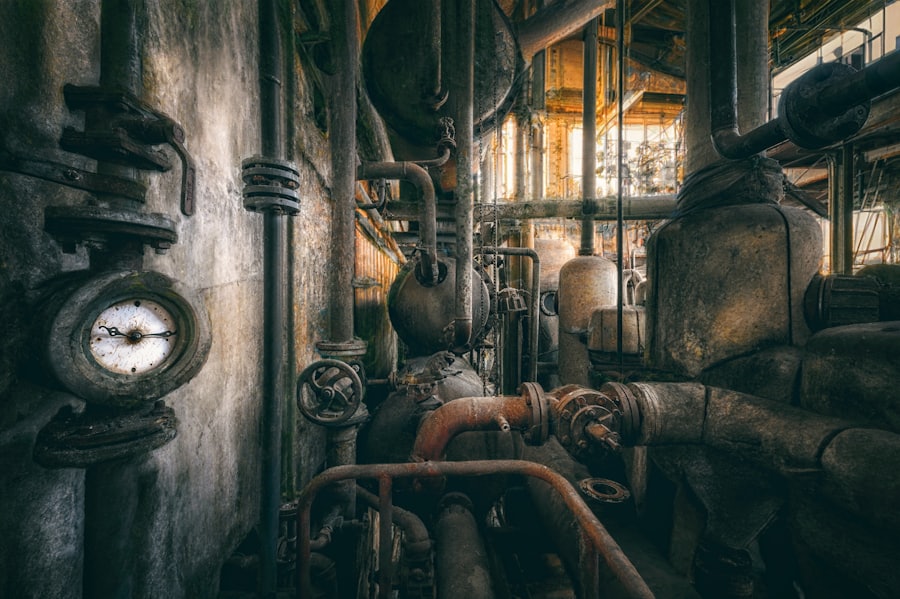
Steampunk is a subgenre of science fiction that imagines the technological future as envisioned by the Victorian era. Steam, not electricity. Brass, not silicon. Mechanical computation, not microchips. It is the universe where Charles Babbage's Analytical Engine actually got built - and started the information age a hundred years too early.
The genre's signature image is the airship: a great brass-bound vessel of wood and canvas, drifting over a London that runs on coal smoke and clockwork. Beneath it: cobbled streets, gas lamps, top hats, and the constant hiss of steam escaping somewhere it shouldn't.
But steampunk is not nostalgia. It is the question: what if the 19th century had stayed? What if we had taken a different fork in the technological road - one with more grease under the fingernails, and more pride in the machine?
Steampunk is the only "-punk" that looks backward to look forward. Its roots are in the actual literature of the Victorian age - and its modern shape was forged by a small group of writers in California who wanted to give a name to the thing they were already doing.
Mary Shelley publishes Frankenstein - the original "what hath man wrought" story. Every tinkerer-gone-too-far descends from Victor.
Jules Verne begins his Voyages Extraordinaires. The Nautilus, the centre of the Earth, the cannon to the Moon - the bones of the genre.
H. G. Wells invents science fiction as we know it, in a single elegant brass sentence: "a glittering metallic framework, scarcely larger than a small clock…"
Michael Moorcock publishes The Warlord of the Air - an alternate 1973 with airships, empire, and a hero out of time. The template is set.
K. W. Jeter writes to Locus Magazine describing his work and that of Tim Powers and James Blaylock as "steampunk". Originally a joke. It sticks.
Gibson and Sterling's The Difference Engine: a Britain where Babbage's machine works, and the Victorian information age is in full, terrible bloom.
Steampunk becomes a movement: fashion, conventions, maker culture. Suddenly everyone has goggles. Some of them know why.
BioShock Infinite drops Columbia from the sky. Steampunk video games are suddenly a genre of their own.
Every gear, valve and rivet is on display. Nothing is hidden in a black box. The pleasure of steampunk is the pleasure of seeing how it works.
The hero is rarely a soldier. More often a tinkerer: an engineer, a clockmaker, a chemist. Someone who has spent ten thousand hours alone with a workbench.
Their workshop is their world. The machine they're building will either save them or kill them, and they cannot quite tell which.
Steampunk's beauty is built on Victorian wealth - which was built on colonial violence. The best modern works confront this honestly.
Modern things rendered in Victorian materials. A computer of brass and ivory. An aircraft of canvas and copper. The thrill is the impossible juxtaposition.
The "punk" in steampunk is the refusal of mass production. It is the artisan against the assembly line, the bespoke against the standardized, the human touch against the algorithm. In a world of identical things, steampunk insists every object be signed by the maker - and capable of being repaired by the person who owns it.
Anachronism is the highest form ofAFTER · THE STEAMPUNK MAGAZINE ·
aesthetic resistance.
Steampunk's palette is the colour of old library and old engine room: burnt sienna, deep cocoa, polished brass, copper, oxblood, verdigris. Everything glows like a lamp in fog. Everything is slightly warm to the touch.
The fashion is high Victorian, reassembled: frock coats, waistcoats, corsets, goggles pushed up onto a brow streaked with grease. The architecture is iron bridges, glass cathedrals, gas-lit arcades. The transport is the airship, the submarine, the brass-fitted locomotive.
Above all: ornament is not crime. The Victorian inventor would rather die than ship an unadorned object. Every machine is also a piece of furniture; every piece of furniture might also be a machine.


The first true science-fictioneer. Verne's Voyages Extraordinaires · Twenty Thousand Leagues Under the Sea, Journey to the Centre of the Earth, From the Earth to the Moon - gave the genre its vocabulary of submarines, airships, and impossible expeditions.
"Anything one man can imagine, other men can make real."
If Verne built the machines, Wells gave them meaning. The Time Machine, The Island of Doctor Moreau, The War of the Worlds, The Invisible Man - each one a foundational text the modern genre still writes around.
The Nomad of the Time Streams trilogy (1971–81) - airships, alternate empires, and a hero displaced from his own century - built the template for everything that came after. The modern genre's first beating heart.
Coined the word "steampunk" in a 1987 letter to Locus, half-joking, to describe his own Morlock Night alongside Powers' Anubis Gates and Blaylock's Homunculus. The joke became a genre.
The Anubis Gates (1983) - time travel, body-snatching, Coleridge, clowns, magic, and the most haunted London ever set to page. The "secret history" strand of steampunk begins here.
The Bas-Lag novels - Perdido Street Station (2000), The Scar, Iron Council - drag steampunk into the 21st century with politics, monsters, and prose like polished brass.
An alternate 1855 in which Babbage's mechanical computer works - and a full-blown Victorian information age has resulted. The manifesto in novel form.
A modern academic is hurled back to 1810 London - into a city of body- swappers, were-creatures, and a beggar-magician king. Pure dark steampunk.
A far-future Earth where entire cities roll on tracks and devour each other. Steampunk grown vast, brutal, and lyrical.
New Crobuzon: a city of soot, steam, alien races, and political menace. The novel that proves steampunk can be properly literary.
The defining steampunk anime: airship pirates, mining towns, and a lost city of floating brass. Possibly the most beautiful film in the genre.
A Parisian station-orphan and a broken automaton. A meditation on cinema, the machine age, and the things we make to remember the dead.
Soot, fog, brass, and clockwork conspiracies. Mainstream cinema discovering it has been adjacent to steampunk for a century.
Tiny stitched-burlap homunculi survive after the human war - post-apocalyptic steampunk distilled to its purest, saddest form.
The flying city of Columbia - a Victorian American utopia rotten with the things American utopias are usually rotten with. Steampunk's most pointed political work.
Dunwall: a plague-ridden whale-oil city of soot, masks, and assassins. The "whalepunk" cousin of steampunk done to perfection.
Steam down the Unterzee in a Victorian London that has sunk to the bottom of the earth. Lovecraftian gothic steampunk, written with literary care.
Steampunk is the road not taken. Set its alternate world next to our own and the choices we made come into focus - for better and for worse.
Steampunk endures because it is the genre of care - for the object, for the maker, for the visible relationship between human hands and the things those hands produce. In an age of disposable plastic and sealed glass slabs, it insists that another world was possible - and possibly still is.
It is also a quiet protest against the future being designed for us: