

I.
Industrial Might
Factories the size of cities. Riveted steel as far as the eye can see. The pride and terror of mass production at scale.
FOUNDRY · ASSEMBLY LINE
Une question, une suggestion, une correction ?
Envoyez-nous un mail directement :
Nous répondons généralement sous 48h.
Dieselpunk is the retrofuture of the diesel age - the world from the eve of the Great War to the dawn of the atom. A century of iron-fisted machines, art deco cathedrals, propeller-driven flight, propaganda posters, and the conviction that the future would be built by men in goggles and leather coats. It is the genre of the industrial sublime - and of every shadow that sublime casts.

Dieselpunk is what you get when you stop steampunk's clock at 1914 and let it run another forty years. Out go the brass and waistcoats; in come diesel engines, riveted steel, art deco skyscrapers and military uniforms. The mood darkens. The machines get bigger. The propaganda starts.
If steampunk is the romance of the Victorian inventor, dieselpunk is the romance - and the horror - of the industrial state. Factories run day and night. Airfleets patrol the sky. Skyscrapers go up overnight, lit from below by neon and from above by searchlights.
The hero is rarely a tinkerer now. They are a pilot, a private eye, a journalist, a resistance fighter. They wear a coat. They keep a flask. They know the war is coming, or already here.
From the trenches to the atom bomb, dieselpunk runs the length of the most industrialized half-century in human history - and refuses to let any of it become quaint.
The diesel engine, machine gun, dreadnought, tank, airplane and airship see their first wartime use. The 19th century ends - on schedule, in mud.
Fritz Lang releases Metropolis: the megacity, the factory worker, the inventor's robot, the towering deco skyline. The dieselpunk image bank is built in a single film.
Art deco reaches its peak. Streamline Moderne curls every locomotive and toaster. The design language of the diesel age is fixed for all time.
Total war. Total industry. Total propaganda. Every visual trope dieselpunk will ever use is forged on a poster or a newsreel between these years.
Trench coats, venetian blinds, cigarette smoke, a saxophone in another room. Hollywood codifies the dieselpunk hero: cynical, broke, on the trail of something that will hurt them.
Game designer Lewis Pollak coins "dieselpunk" for his RPG Children of the Sun. A name for what fans had been making for thirty years.
Kerry Conran's Sky Captain and the World of Tomorrow drops a fully realized dieselpunk vision into the multiplex.
BioShock places the player inside a drowned art-deco utopia and asks: is the dieselpunk dream a paradise or a tomb? Both.
Factories the size of cities. Riveted steel as far as the eye can see. The pride and terror of mass production at scale.
Tanks, bombers, dreadnoughts, mech-soldiers, U-boats. The diesel era invented the machinery of total war - and dieselpunk refuses to pretend that machinery was ever neutral.
Every shining ace's biplane has a bomb bay underneath.
The Chrysler Building, the Hoover Dam, the SS Normandie. The diesel age made the everyday monumental - and you can still see the bones.
Dieselpunk knows what kind of aesthetics it's borrowing. Propaganda posters, mass rallies, the cult of the leader - it stares at them and asks why they're still beautiful.
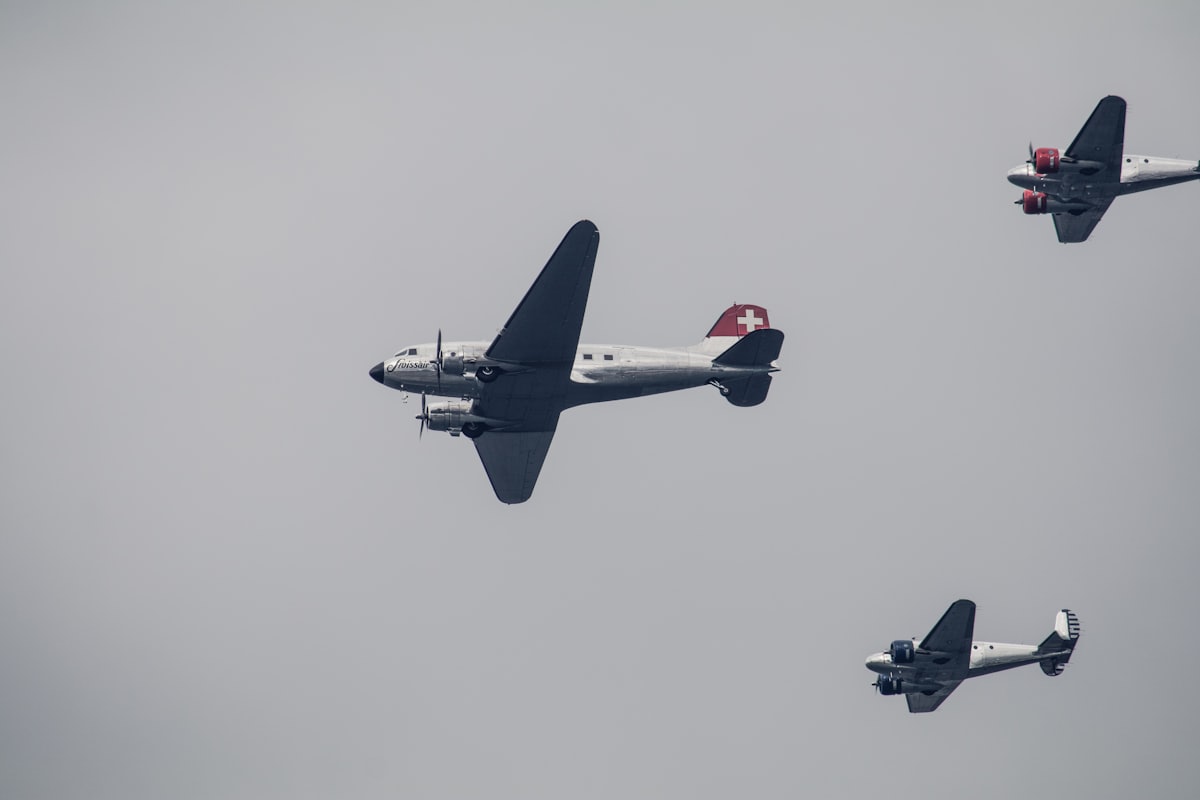
The dieselpunk protagonist is rarely on the side of the State. They are a pilot gone freelance, a journalist working alone, a private eye who's seen too much, a resistance fighter in a city that doesn't know it's been occupied. Dieselpunk is the refusal to salute - and the willingness to fly the last unarmed biplane straight at the bomber fleet.
Every machine was a promise.FROM A WARTIME POSTER, ARTIST UNKNOWN
Every machine was a threat.
Dieselpunk's palette is the colour of oil, smoke, gunmetal, leather and mustard. The sky is always overcast. The light comes from a single bulb, a spotlight, or a tracer round.
The fashion is high 1930s, dressed for purpose: trench coats, leather flight jackets, fedoras, military caps, slim trousers. Goggles stay - but now they are for the cockpit, not the workshop.
The architecture is art deco at full power: stepped skyscrapers, marble lobbies, brass elevators, neon signs above the entrance, a doorman who is also an ex-soldier.


Metropolis (1927) is the dieselpunk source code. M, Spies, and Dr. Mabuse follow - each one a paranoid masterpiece about the machinery of the modern state.
"The mediator between the head and the hands must be the heart."
Founded Amazing Stories in 1926 and turned pulp covers into the visual imagination of an entire half-century. Every ray-gun rocket-fin trope is downstream of his magazines.
American Flagg! (1983) imported deco-modernist design and dieselpunk politics into mainstream comics, decades before the genre had a name.
The Separation (2002) splits a single life into two alternate WWIIs. The Prestige (1995) digs into the diesel-era obsession with rivalry, doubles, and the cost of invention.
The Bookman Histories (2010–13) take dieselpunk into a counter-British Empire fever dream of lizard queens, anarchists and airships. Smart, fast, mean.
The genre's original image: a vertical megacity, a workers' underworld, a mad inventor's robot. Still unmatched.
The most fully realized dieselpunk film yet made - mile-high robots, pulp serials, ace pilots and a sky that never quits.
Bureaucracy as horror, ductwork as art form. A retrofuturist nightmare that keeps getting more relevant every year.
A 1938 stunt pilot finds a jet-pack the Nazis want back. Pure dieselpunk in Saturday-matinee form.
A corporate-controlled near-future America, drawn with deco discipline and written with savage wit. Dieselpunk before the word existed.
An alternate WWII told through twin brothers who took opposite sides. A novel that takes the diesel era's moral weight seriously.
A counter-Britain ruled by lizard queens, terrorized by an anarchist bookbinder. Smart-mouthed, savage, modern dieselpunk.
Rapture: a 1950s art-deco utopia drowned beneath the Atlantic. The greatest dieselpunk environment ever shipped.
An America in which the Reich won the war - rendered in deco propaganda detail. The dieselpunk nightmare made interactive.
A 1937 in which the United States has fractured and the air is full of pirate biplanes. The dieselpunk pilot fantasy in full.
Set the diesel imagination next to our timeline and you can see what we kept - and what we lost on the way.
Dieselpunk matters because the diesel century is the one we are still living in the ruins of. Its infrastructure, its institutions, its imagery, its anxieties - all of them are still load-bearing in the world of 2026. To take dieselpunk seriously is to look at the world of our grandparents and ask which of its promises were kept, and which of its monsters we never quite buried.
It is the genre of the question that won't go away: