Space as a Job Site
The void isn't wonder, it's a workplace. Spacepunk takes the awe out of space and puts in shift work, hazard pay, and the long haul between ports.
HAUL · SHIFT · OVERTIME

07 / 13SECTOR 7G · OXYGEN 94% · ORBIT STABLE
Vacuum · Rust · Working Stiffs
Blue-collar in the black: the frontier has a payroll.
LOG § I · MANIFESTO
Spacepunk is the genre of the used future, the outer space that smells of ozone and diesel, where the ships are rusty freighters, patched hulls, and analog cockpits held together with duct tape and overtime. Where space is not a frontier of wonder but a workplace. Where the people who fly between the stars are truckers, miners, salvagers, and smugglers, not admirals.
LOG § II · DEFINITION
Spacepunk is cyberpunk's orbital cousin. Where cyberpunk imagines a future of neon megacities and corporate towers, spacepunk imagines the same class war, the same corporate rot, the same gutter ingenuity, just hauled out into the vacuum. The hacker isn't jacking a server. They're rerouting a life-support board with a soldering iron and a prayer.
Its settings are cargo holds, mining colonies, derelict stations, rusted-out docking rings, backwater spaceports. Its technologies are analog, leaky, and one cosmic-ray bitflip from killing everyone aboard. Its anxieties are about oxygen, debt, the company, and the long dark between ports.
Spacepunk asks the spacer's question out loud: if the company owns the air you breathe, were you ever really free?
CORE THESISSpace is not a destiny. It is a job site, cold, leased by the hour, and owned by a corporation that charges you rent on the vacuum.
LOG § III · CHRONOLOGY
Spacepunk grew out of pulp space opera the way grease grows out of an engine room, the longer the future ran, the dirtier and more lived-in it got.
Golden-age magazines fill space with square-jawed heroes and gleaming rockets. The chrome is spotless. The future is clean. Spacepunk is what happens when that chrome starts to rust.
Tom Godwin's short story in Astounding makes the fuel budget the villain: one stowaway too many and the math kills her. Physics as an unforgiving employer.
Alfred Bester's Gully Foyle, an abandoned spacer left to die, who claws his way back through a corporate-owned solar system. The blue-collar revenge story that prefigured the whole tone.
Heinlein's lunar penal colony rises against the Authority that ships its grain to Earth. The colony-versus-metropole revolt every later Belter story echoes.
Skylab 4's crew clashes with mission control over a punishing workload. The press dubs it the "Skylab strike"; NASA and the astronauts deny any strike happened, but the image of a labor dispute in orbit sticks.
Joe Haldeman drags space combat out of heroism and into the mud: conscripts, bureaucracy, relativistic alienation, and a soldier who comes home to a future that forgot him. Vietnam in vacuum.
A NASA summer study at Ames and Stanford designs a rotating wheel town for 10,000 people, and its public-domain paintings become the utopian baseline that spacepunk will dirty up.
Star Wars puts a battered freighter and scrap-dressed sets on screen, and GDW publishes Traveller, a game of tramp traders and ship payments.
Ridley Scott's Alien gives space a working class. The crew of the Nostromo are truckers arguing about shares and overtime, and the future would never look clean again.
C.J. Cherryh's Company Wars render interstellar politics as logistics, refugees, and station economics. Space as a supply chain with people caught in the gears.
David Braben and Ian Bell hand players 100 credits and a Cobra Mk III. Trading your way across the galaxy becomes a genre of its own.
Bruce Sterling takes cyberpunk into the asteroid belt: Shapers, Mechanists, habitats and cartels.
Shinichirō Watanabe's broke bounty hunters and Yoko Kanno's jazz give the used future its coolest form.
Makoto Yukimura's manga about orbital garbage collectors begins in Morning, the most grounded working-class space story in comics.
Joss Whedon's crew of the Serenity, smugglers and outcasts dodging the Alliance on the ragged edge of settled space. Cowboys in the black; spacepunk's beating heart.
CCP's single-shard galaxy launches, a universe run by player corporations, miners and haulers.
Duncan Jones's lone helium-3 miner discovers what Lunar Industries really thinks of its workforce.
James S.A. Corey's Belters, Earthers, and Martians fight over water, air, and gravity. The most fully realized spacepunk universe ever written, politics, plumbing, and all.
Games like Hardspace: Shipbreaker turn the genre into labor itself: cutting apart derelict hulls for a corporation that bills you for your own air. Spacepunk becomes a clock-in job.
Andor brings salvage yards and a prison factory into Star Wars, while Citizen Sleeper makes precarious gig work on a lawless station into a game.
Bong Joon Ho's Expendable, reprinted each time a deadly job kills him, takes the disposable spacer to the multiplex.
LOG § IV · FIVE PILLARS
The void isn't wonder, it's a workplace. Spacepunk takes the awe out of space and puts in shift work, hazard pay, and the long haul between ports.
HAUL · SHIFT · OVERTIME
If a corporation can meter your oxygen, they can meter everything. Your water. Your gravity. Your debt. Your way home.
Spacepunk's central nightmare is not an alien. It is the invoice waiting at the airlock.
RENT · DEBT · OXYGEN
Between ports there is nothing but vacuum, radiation, and a hull one millimeter thick. Spacepunk is haunted by the leak, the bitflip, the silence on the comms.
VACUUM · DRIFT · SILENCE
A crew is the only warmth in a cold system. Spacepunk holds both possibilities, mutiny and loyalty, in the same cramped galley.
CREW · GALLEY · SHARES
The "punk" in spacepunk is the spacer who tells the company no: the Belter, the smuggler, the asteroid co-op, the salvager who jury-rigs a dead ship back to life rather than scrapping it for a fee. Refusing to let the frontier become just another company town. Insisting the void belongs to the people who breathe it, with all the risk that implies.
BELTER · SALVAGE · INDEPENDENCE
We were never explorers. We were always labor.
LOG § V · VISUAL LANGUAGE
Spacepunk's palette is void black, starfield white, cosmic cyan, warning amber, and nebula magenta, set against the cold grey of a riveted bulkhead. Everything is scuffed. Everything hums with a CRT glow.
The fashion is flight suits, patched coveralls, mag-boots, vac-suits with hand-stencilled names. The architecture is cramped cockpits, cargo holds, rotating habitats, and rusted docking rings. The transport is always visible, the ship is a character, the engine room is a set, the airlock is a threat.
Visually, spacepunk borrows from analog NASA control rooms, oil rigs, and the lived-in grime of the Nostromo.
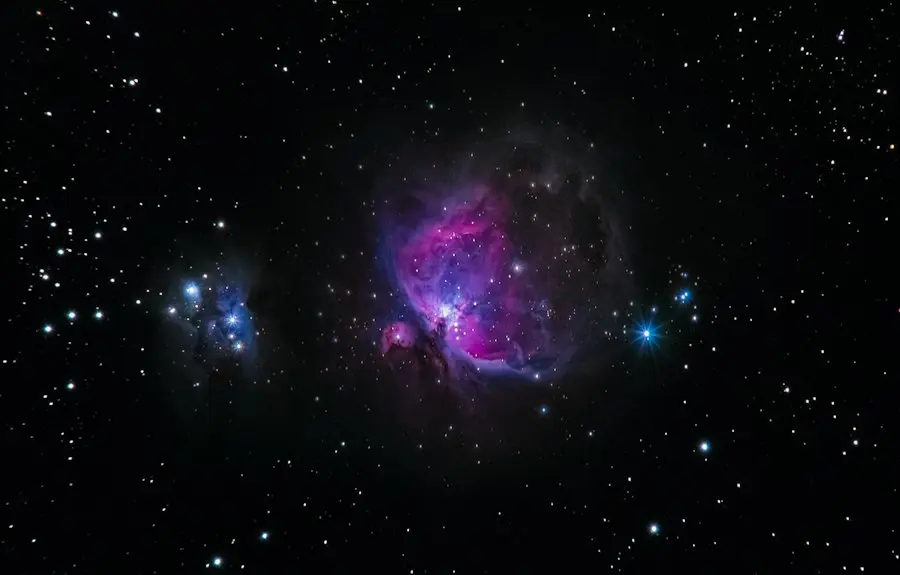
LOG § VI · VIEWPORTS
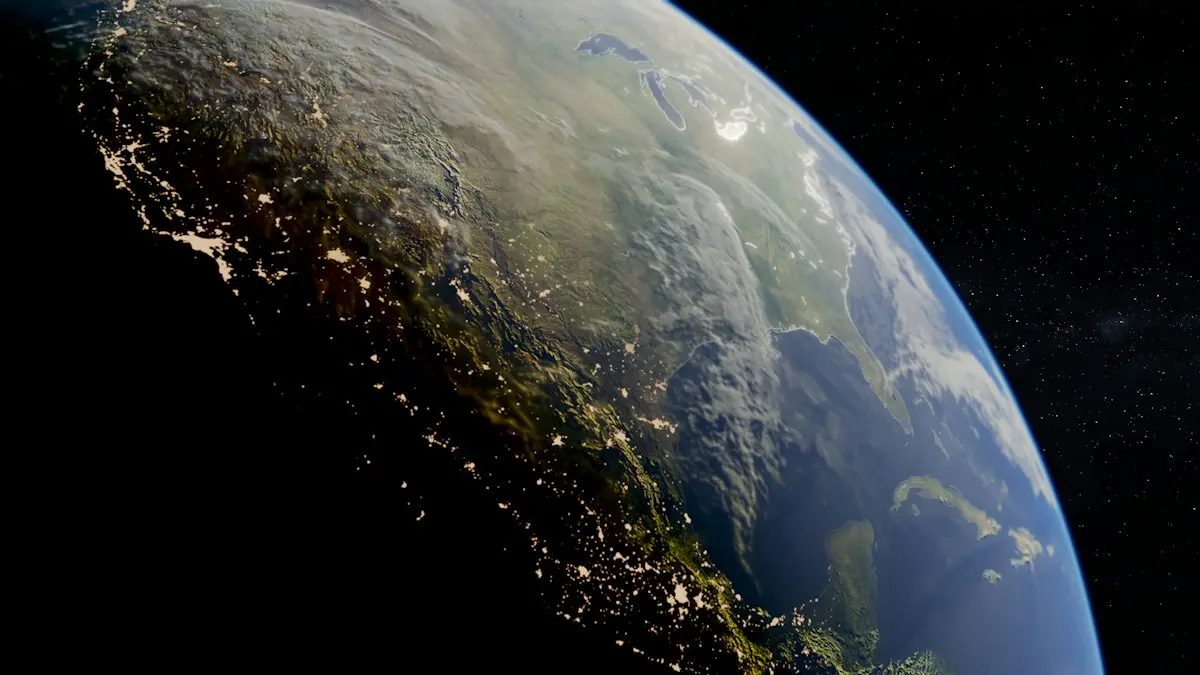
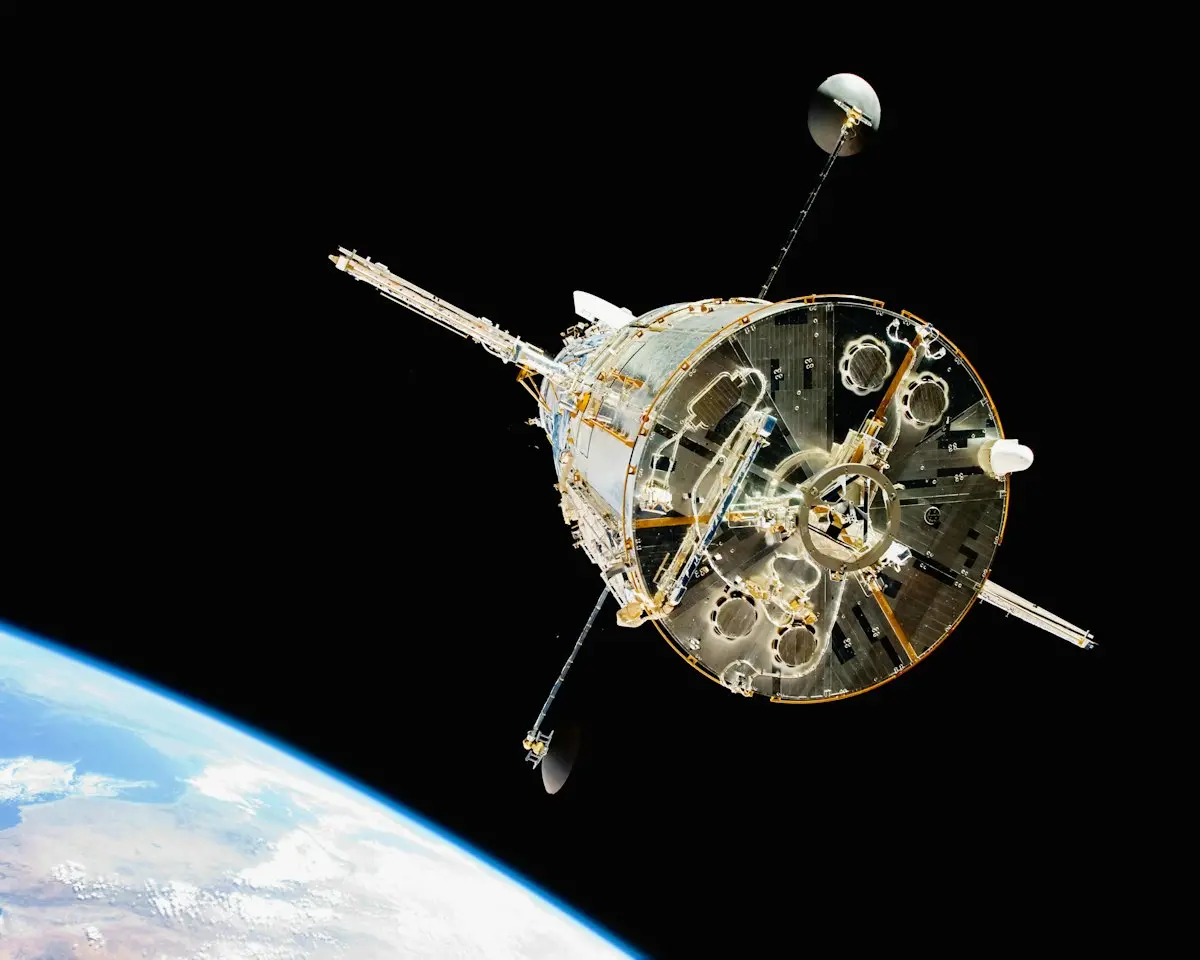

LOG § VII · THE NAVIGATORS
LOG § VIII · THE MANIFEST
From pulp satire to shipbreaking sims: the novels, films, shows, comics, games, records and paintings that built the used future. Works marked adjacent share the look or the politics but sit mostly in a neighbouring genre.
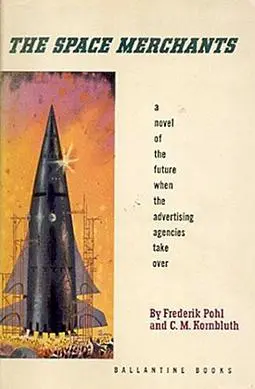 Book
Frederik Pohl & C. M. Kornbluth · 1952
Adjacent forerunner: a satire in which ad agencies and trans-national corporations run the world, and settling Venus is just another campaign to sell. The first hint that the frontier would arrive with a marketing budget.
Tom Godwin · 1954
A short story in which an emergency ship carries fuel for exactly one pilot, and a stowaway tips the mass budget. Spacepunk's cruel arithmetic of margins and payload starts here.
 Book
Alfred Bester · 1956
Gully Foyle, left to die in a wrecked freighter, teleports his way back through a corporate solar system on pure vengeance.
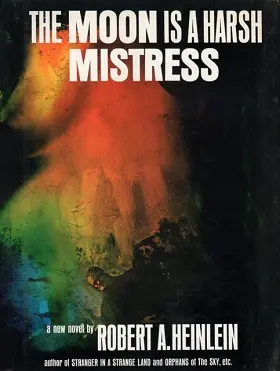 Book
Robert A. Heinlein · 1966
Lunar penal colonists rise against the Authority that ships their grain to Earth. Adjacent (it belongs to lunapunk too), but its colony-versus-metropole revolt is the template every Belter uprising follows.
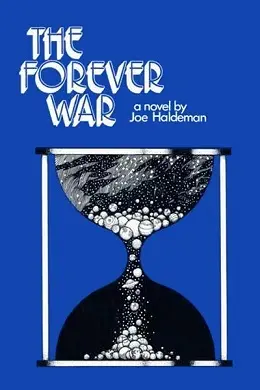 Book
Joe Haldeman · 1974
A conscript fights an endless interstellar war and returns, time and again, to a future that no longer remembers him.
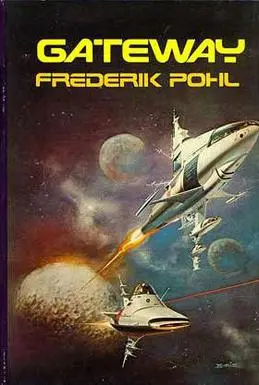 Book
Frederik Pohl · 1977
Poor prospectors bet their lives on abandoned alien ships with unknown destinations, hoping for a payout before the station's fees eat them alive. A Hugo and Nebula winner about risk as the price of escaping poverty.
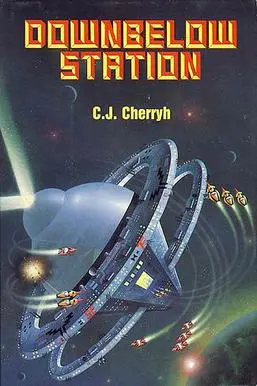 Book
C. J. Cherryh · 1981
Refugees, merchanters and a stressed station crew caught between the Earth Company and Union. Hugo winner that treats interstellar war as logistics and overcrowded docks.
 Book
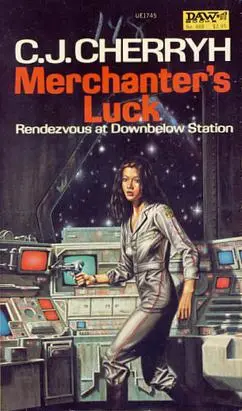
C. J. Cherryh · 1982
A broke, half-legal captain running a ghost ship alone meets the crew of a great family freighter. Cherryh's merchanters are a whole culture of people who live and die aboard their haulers.
 Book
Bruce Sterling · 1985
Cyberpunk's chief ideologue moves the movement into orbit: gene-tweaked Shapers versus machine-augmented Mechanists, habitat politics and cartels in the belt. Cyberpunk in vacuum.
 Book
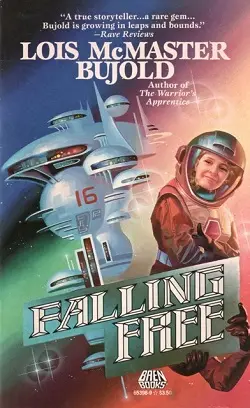
Lois McMaster Bujold · 1988
A corporation engineers four-armed Quaddies for zero-g labor and legally classes them as tissue cultures, not people. When their contract becomes obsolete, the workers take the habitat and run.
C. J. Cherryh · 1991
Belt miners versus ASTEX, the mining arm of the Earth Company: claim disputes, corruption and prospectors squeezed to breaking. Cherryh's most direct asteroid-labor novel (collected in Devil to the Belt).
 Book
Kim Stanley Robinson · 1992
The first hundred settlers watch transnational corporations turn Mars into a resource colony, and the colonists answer with revolution. Book one of the Mars trilogy, labor history written in regolith.
 Book
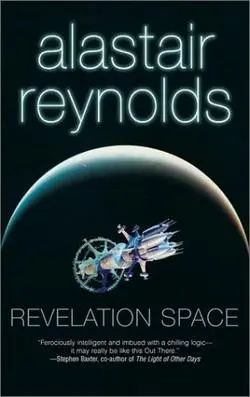
Alastair Reynolds · 2000
Adjacent: gothic space opera, but its decaying lighthugger crews, plague-wrecked cities and patched ships give the far future a deeply used texture.
 Book
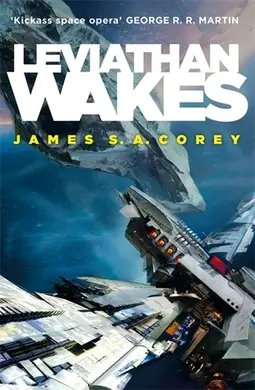
James S.A. Corey · 2011
A missing girl, a dead ice-hauler, and a system on the edge of war. Book one of The Expanse, the spacepunk modern canon.
 Book
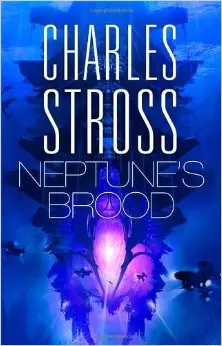
Charles Stross · 2013
Interstellar colonies are financed with slow money, debt that takes centuries to mature, and every new world is born owing its founders. Spacepunk as a novel about the bond market.
 Book
Becky Chambers · 2014
A diverse, patched-together crew on a tunnelling ship navigating a corporate galaxy. Spacepunk's most humane and hopeful novel.
 Book
Martha Wells · 2017
A security cyborg rented out by a penny-pinching company hacks its own governor module and would rather watch soap operas than kill. Book one of the Murderbot Diaries: labor, contracts and personhood.
 Book
Andy Weir · 2017
A porter and part-time smuggler in the Moon's only city chases one big job to climb out of debt. Adjacent (lunapunk), but very much the economics of a company town in vacuum.
 Book
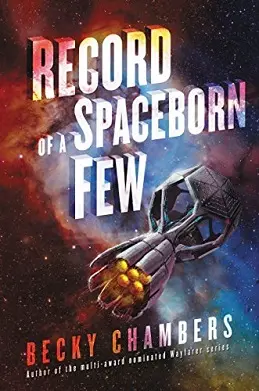
Becky Chambers · 2018
Ordinary lives aboard the aging generation ships of the Exodus Fleet: recycling, maintenance, funerals, and whether to stay. The quiet domestic side of the used future.
 Book
Daniel Suarez · 2019
A billionaire recruits cave divers and adventurers to crew the first asteroid-mining expedition, and the bill is paid in lives. A near-future techno-thriller about who does the dangerous work.
 Film
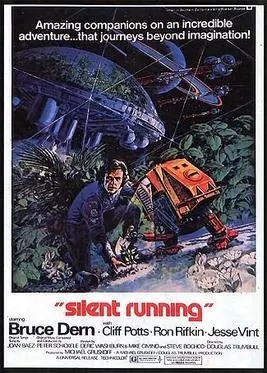
Douglas Trumbull · 1972
Adjacent: a lone botanist on a space freighter refuses the order to destroy the last forests in its domes. A worker who will not follow the company's instructions.
 Film
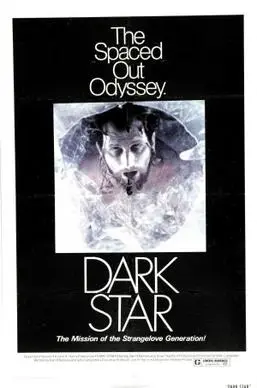
John Carpenter · 1974
Bored, bearded crewmen twenty years into a planet-demolition job on a ship that is falling apart. Co-written by Dan O'Bannon, who carried its grime straight into Alien.
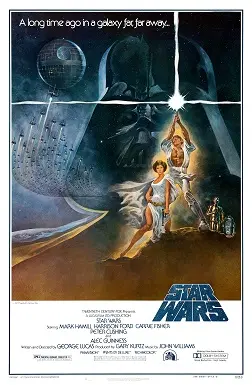 Film
George Lucas · 1977
Adjacent in politics, essential in look: the battered Millennium Falcon, dusty droids and scrap-dressed sets made the worn, lived-in future a mainstream look.
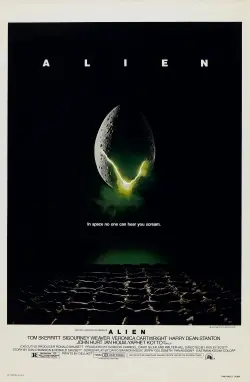 Film
Ridley Scott · 1979
The crew of the Nostromo are space truckers arguing about shares. The film that gave the future its grime.
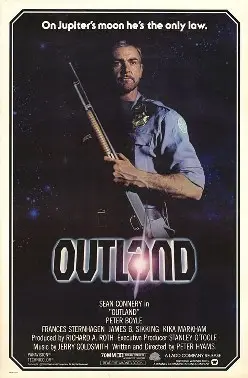 Film
Peter Hyams · 1981
A marshal on a mining facility on Io discovers the company is dosing miners with an amphetamine-type drug to push productivity until they snap. High Noon in a company town.
 Film
James Cameron · 1986
Colonial marines and terraforming colonists sacrificed to Weyland-Yutani's balance sheet. The grunt's-eye view of corporate space.
 Film
Paul Verhoeven · 1990
Mars as a mining colony whose administrator controls the ore and, in the end, the air itself, shutting off oxygen to the mutant district. Metered breathing, literalized.
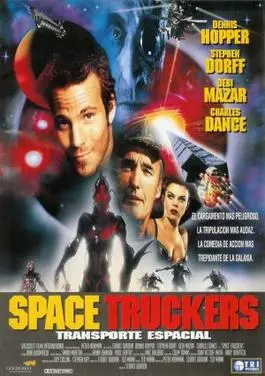 Film
Stuart Gordon · 1996
Dennis Hopper as one of the last independent haulers, squeezed by a trucking company. Camp, but it names the genre's working-class premise out loud.
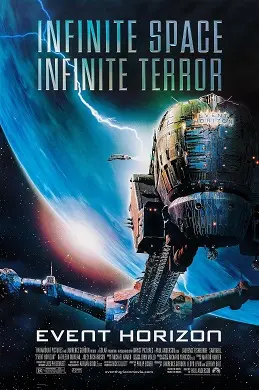 Film
Paul W. S. Anderson · 1997
Adjacent horror: a rescue crew with blue-collar banter is sent to recover a lost experimental ship. Industrial corridors and a job no one wanted.
 Film
Joss Whedon · 2005
The feature-film coda to Firefly: the crew of a cargo ship uncovers what the Alliance did to a whole planet.
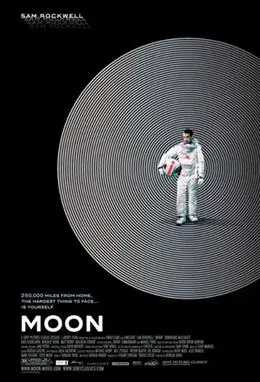 Film
Duncan Jones · 2009
A lone helium-3 miner nearing the end of his three-year contract learns what Lunar Industries really thinks of its workforce. The definitive film about the disposable spacer.
 Film
Neill Blomkamp · 2013
Adjacent: the rich live in an orbital habitat while workers on a poisoned Earth build its robots. Class war with the station as the gated community.
 Film
Claire Denis · 2018
Death-row prisoners are shipped toward a black hole as an expendable crew and experimental subjects. Bleak, intimate, and unapologetically about who gets sent.
 Film
Fede Álvarez · 2024
Young workers on the perpetually dark Jackson's Star mining colony try to escape after Weyland-Yutani forcibly extends their contracts. Labor desperation is the engine of the plot.
 Film
Bong Joon Ho · 2025
An Expendable on a colony mission does the deadly jobs and is reprinted from a clone each time he dies. Spacepunk's disposable worker turned into black comedy.
 Series
Terry Nation · 1978
Adjacent: escaped convicts on a stolen ship against a totalitarian Federation, with cheap sets and no happy ending. British space opera with the gloss scraped off.
 Series
Rob Grant & Doug Naylor · 1988
The lowest-ranking technician on a mining ship wakes three million years late as the last human alive. The used future as sitcom: curry, bunk-room squabbles and failing machinery.
 Series
Matt Groening · 1999
Essentially a workplace sitcom set at an interplanetary delivery company with terrible safety standards. Satire of the space trucker life.
 Series
Joss Whedon · 2002
Smugglers and outcasts dodge the Alliance on the rim of settled space. Cowboys in the black; spacepunk distilled.
 Series
Ronald D. Moore · 2004
Adjacent: a ragged civilian fleet of aging ships survives on rationed fuel and handheld phones bolted to bulkheads. Military SF with a very used texture.
Alcon / Syfy · 2015
The most fully realized spacepunk on screen: Belter slang, ship physics, water politics, and a system spoiling for war.
 Series
Michelle Lovretta · 2015
Bounty hunters working warrants in the Quad, a four-world system owned by the Company and run on class lines. Pulpy, but its politics are pure spacepunk.
 Series
Joseph Mallozzi & Paul Mullie · 2015
A crew wakes on a ship with no memories and learns they are wanted mercenaries in a galaxy run by corporations.
 Series
Armando Iannucci · 2020
Adjacent satire: a space cruise liner knocked off course, run by incompetents and a billionaire owner. Corporate space as a farce of liability.
 Series
Tony Gilroy · 2022
Salvage yards on Ferrix, an Imperial prison-factory on Narkina 5, and ordinary workers radicalized into rebellion. The most labor-minded corner of Star Wars.
 Film
Yoshiyuki Tomino · 1979
Adjacent: space colonists wage a war of independence against an Earth that treats them as a periphery. Founded the real-robot style, where mecha are mass-produced industrial hardware.
 Film
Shinichirō Watanabe · 1998
Broke bounty hunters on an aging ship, always one bounty away from the next meal. The genre's coolest and most melancholy expression.
 Film
Mitsuru Hongo / Sunrise · 1998
A small-time handyman stumbles onto a prototype ship and becomes an outlaw by necessity. Adjacent, mixing space western with magic and treasure hunting.
 Film
Gorō Taniguchi / Sunrise · 2003
The anime adaptation follows a debris-collection section treated as the company's lowest rung. Celebrated for orbital-mechanics realism and its office politics in orbit.
 Film
Tatsuyuki Nagai · 2015
Child laborers on a terraformed Mars overthrow their bosses and form a mercenary company. Explicitly about poverty, child soldiers and neo-colonialism.
 Film
Hiroshi Kobayashi · 2022
Megacorporations run a space economy that leaves Earth-born Earthians poor and Spacians rich. A school drama on top, a class war underneath.
 Comic
John Wagner & Carlos Ezquerra · 1978
Adjacent: mutant bounty hunters do the dirty work nobody else will touch. A British comics staple about outcasts earning a living across the stars.
 Comic
Alejandro Jodorowsky & Mœbius · 1980
Adjacent: a low-class private eye from a vertical slum city drags himself across the cosmos. Mœbius, who also did concept work for Alien, drew the grimy universe.
 Comic
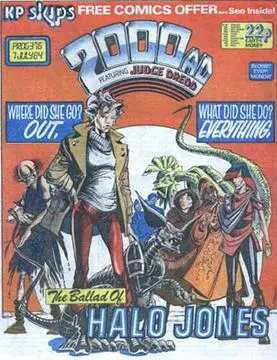
Alan Moore & Ian Gibson · 1984
An ordinary young woman escapes a jobless floating ghetto by working on a space liner and then enlisting in an interstellar war. One of 2000 AD's high points.
ComicMakoto Yukimura · 1999
Space-debris collectors in 2075, the garbage crews of orbit. The most grounded working-class space story in manga.
 Comic
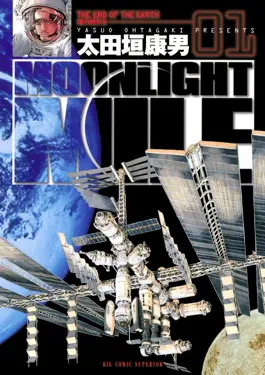
Yasuo Ohtagaki · 2000
Two climbers chase space by different routes; one becomes a construction worker building on the Moon. Spaceflight seen through hard hats and contracts.
 Comic
Tsutomu Nihei · 2009
Adjacent: life aboard a cramped, ancient seed ship, seen through an under-dweller who becomes a pilot. Nihei's industrial megastructure style applied to a generation ship.
 Game
David Braben & Ian Bell · 1984
You start with 100 credits and a Cobra Mk III and trade your way up. The original working-spacer sandbox.
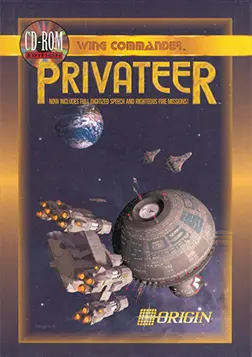 Game
Origin Systems · 1993
Not a navy pilot but a freelancer: merchant, mercenary or pirate, paying off your own ship.
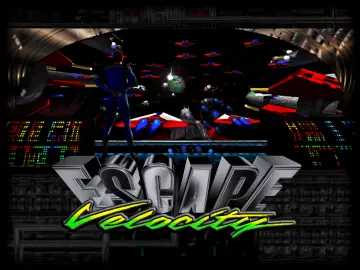 Game
Ambrosia Software · 1996
A Mac cult classic of trading and combat that let a generation haul cargo between ports in top-down 2D.
 Game
CCP Games · 2003
A single-shard galaxy run by player corporations, miners and haulers, where supply chains and betrayal are the real game.
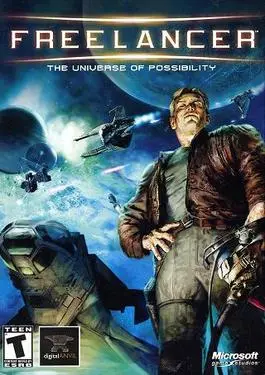 Game
Digital Anvil · 2003
Trader, pirate or bounty hunter across 48 systems. A friendlier take on the working spacer fantasy.
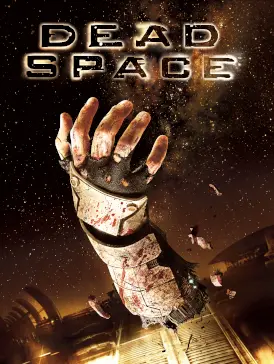 Game
EA Redwood Shores · 2008
An engineer, not a soldier, boards a planet-cracking mining ship gone silent. Survival horror built on tools, maintenance shafts and corporate cover-ups.
 Game
Subset Games · 2012
A failing ship, a skeleton crew, and a fleet on your tail. Manage oxygen, fire, and breach, spacepunk as a survival ledger.
 Game
Frontier · 2014
A whole galaxy to trade, mine, smuggle, and pirate across. The open-ended sandbox of the working spacer.
 Game
Creative Assembly · 2014
Amanda Ripley crawls through Sevastopol, a station rotting from years of corporate negligence. The Nostromo aesthetic rebuilt in perfect, flickering detail.
 Game
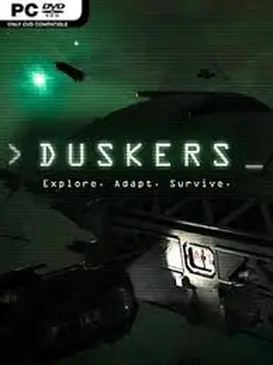
Misfits Attic · 2016
Command drones by typed commands to salvage scrap and fuel from derelicts. Lonely, terminal-green spacepunk.
 Game
Suspicious Developments · 2017
Adjacent: a mercenary in a tiny shuttle boards passing ships to steal and liberate. Improvised and gloriously messy.
 Game
Fullbright · 2017
Explore an empty station in 2088 and piece together how its crew was treated by their hypercorporate employer. Quiet, devastating and pro-worker.
 Game
Mobius Digital · 2019
Adjacent: a tiny backwater space program flies rickety ships held together with hope. Wonder rather than labor, but deeply homemade.
 Game
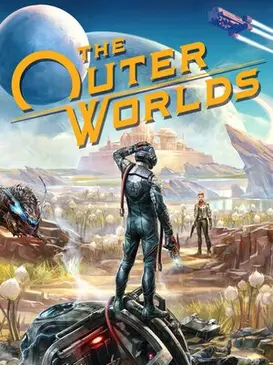
Obsidian Entertainment · 2019
A colony system owned outright by megacorporations, where workers are company property in all but name. Corporate space satire from the creators of Fallout.
 Game
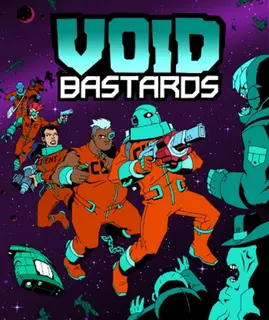
Blue Manchu · 2019
Rehydrated prisoners are sent to scavenge derelicts for a ship's AI, then replaced when they die. Comic-book art, disposable labor.
 Game
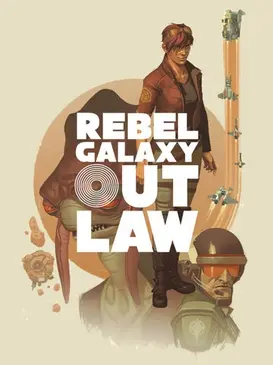
Double Damage Games · 2019
A retired pirate rebuilds her life from a junker ship, with in-cockpit radio stations playing. Space trucker energy.
Blue Bottle Games · 2020
Salvage abandoned vessels in a boneyard to pay off debt and keep fuel, air and food stocked. Early access from 2020, full release in 2026; the most detailed debt-and-salvage sim yet.
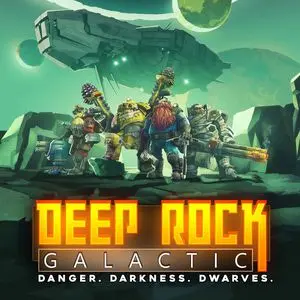 Game
Ghost Ship Games · 2020
Co-op dwarf miners on contract to an intergalactic mining corporation, drilling deadly caves for its profit. Rock and stone.
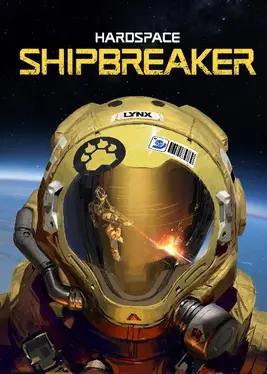 Game
Blackbird Interactive · 2022
Cut apart derelict ships for a corporation that bills you for your own air. The purest labor-spacepunk ever shipped.
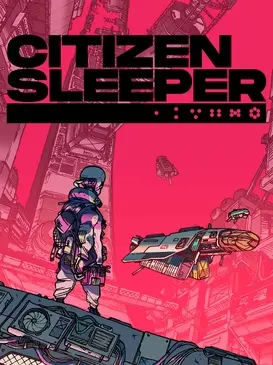 Game
Jump Over the Age · 2022
A digitized mind in a corporate-owned body escapes indentured servitude to a lawless station. Dice-driven precarity, gig work and solidarity.
 Game
Zeekerss · 2023
Co-op contractors scavenge scrap from abandoned industrial moons to meet the Company's quota. A meme-friendly horror game that is really about being a disposable worker.
 Game
Telltale Games & Deck Nine · 2023
A Belter scavenger crew in the Expanse universe, picking through wrecks for a living.
 Game
Bethesda Game Studios · 2023
Adjacent: Todd Howard named its look NASApunk, chunky, functional, real-world-inspired hardware. A vast sandbox that leans on the used-future look.
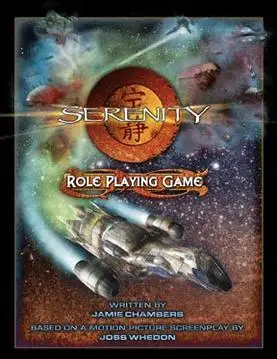
 Game
Marc Miller / GDW · 1977
The grandfather of spacepunk gaming: tramp freighters, ship mortgages and characters who can die during creation.
 Game
Margaret Weis Productions · 2005
The Firefly universe at the table, and the first version of the Cortex System.
 Game
Vlaada Chvátil · 2007
Build a ship from junk tiles in real time, then watch meteors tear it apart on the delivery run. The genre's best board game joke.
 Game
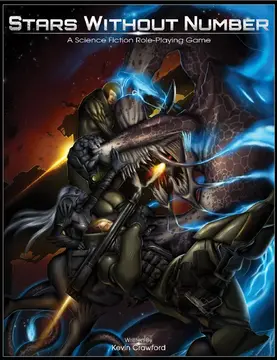
Kevin Crawford / Sine Nomine · 2010
An old-school sandbox RPG of scavenging a fallen interstellar civilization, first released as a free PDF.
Gale Force Nine · 2013
Captain your own ship, hire crew and take risky jobs across the 'Verse.
Sean McCoy / Tuesday Knight Games · 2018
Sci-fi horror for crews of teamsters, scientists, androids and marines, run on stress and panic checks. ENNIE Gold for Best Game in 2019.
Stras Acimovic & John LeBoeuf-Little · 2018
A Forged in the Dark game about a ship's crew scraping by under the Galactic Hegemony, explicitly inspired by Firefly and Cowboy Bebop.
 Game
Free League Publishing · 2019
Colonial marines, roughnecks and company agents under Weyland-Yutani. A stress-dice horror game that won three ENNIE Awards.
Steve Kenson / Green Ronin · 2019
The Expanse at the table on the AGE system, with Belters, Martians and Earthers in play.
 Music
David Bowie · 1969
Adjacent: Major Tom, alone and adrift as ground control loses him. The pop founding myth of the lonely spacer.
 Music
Elton John & Bernie Taupin · 1972
Inspired by a Bradbury story about a professional astronaut, it treats a Mars run as a job that keeps a man from his family. Spaceflight as the commute.
 Music
Hawkwind · 1973
Adjacent: the defining live album of space rock, noisy, scruffy and very un-NASA.
 Music
Yoko Kanno & Seatbelts · 1998
Jazz, blues and big-band for a crew of broke bounty hunters. The sound most people now hear when they picture the used future.
 Art
Don Davis / NASA Ames · 1975
The 1975 NASA summer study's art imagined space settlements as working towns of 10,000 people. The public-domain mother lode of rotating-habitat imagery.
 Art
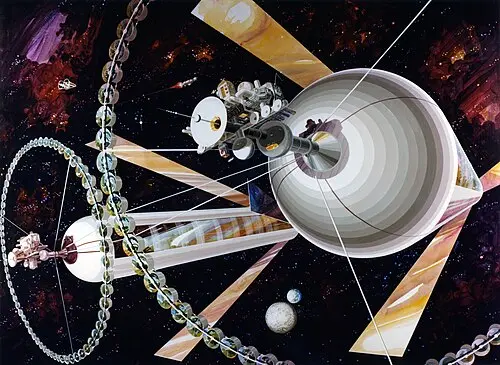
Rick Guidice / NASA · 1970
NASA Ames paintings of Gerard K. O'Neill's habitats, with suburbs curving up the walls. The utopian baseline spacepunk later dirtied up.
Ron Cobb · 1974
Concept artist on Dark Star, Star Wars and Alien, whose engineer-minded designs of the Nostromo made ships look like workplaces.
 Art
Chris Foss · 1970
His hulking, striped, industrial spacecraft on 1970s paperback covers, and his concept work on Alien, defined the heavy-freighter look.
 Art
Ralph McQuarrie · 1977
The concept paintings that sold Star Wars to Fox established the battered, weathered future on screen.
Jean Giraud · 1979
Mœbius contributed concept designs during his brief stint on Alien, and his comics gave the grimy cosmos its line.
 Art
Syd Mead · 1933
Adjacent: the industrial designer whose film credits include Aliens and Elysium, bringing believable engineering to military and orbital hardware.
LOG § IX · RESOURCES
Where to go next: reference works, criticism, real-world space books, documentaries and archives for anyone mapping the used future.
Lexicon · 15 terms
The family's own vocabulary and the shared terms it uses. Pick one to read it here, or follow it into the glossary.
A human born and raised in the asteroid belt or outer system, lean, low-gravity, and politically at the bottom of the solar pecking order.
In the glossaryThe constructed language linguist Nick Farmer built for the Expanse TV series, a creole of the belt, and a flag of identity for people the inner planets look down on.
In the glossaryThe change in velocity a ship can manage with its remaining fuel. In spacepunk, the difference between making port and dying in the dark.
In the glossaryA worker whose death is budgeted for. In Mickey 17 he is literally reprinted from a clone after every fatal shift.
In the glossaryA cascade in which orbital debris collisions create more debris, until orbit becomes a minefield. The reason Planetes needs garbage crews.
In the glossaryA company whose power exceeds that of states. The recurring antagonist of cyberpunk, and the payroll of spacepunk.
In the glossaryBujold's four-armed, zero-g workers, engineered by a corporation and legally classed as tissue cultures rather than people.
In the glossaryStripping a derelict hull for parts and scrap, legally murky, physically lethal, and often the only paying work in the belt.
In the glossaryCutting a dead vessel apart for salvage and scrap. Dangerous, underpaid, and the whole job in Hardspace: Shipbreaker.
In the glossaryA hauler moving freight between ports for the company's cut. The Nostromo's crew were designed as exactly this.
In the glossaryArtificial gravity from a rotating habitat. Cheap, finite, and the first thing the company shuts off when you fall behind on rent.
In the glossarySpacer slang for the void between ports. Cold, silent, and indifferent. The spacepunk apocalypse, in two words.
In the glossaryNever just a business. In spacepunk it is landlord, employer, police and air supplier at once, Weyland-Yutani, Lunar Industries, the Earth Company.
In the glossaryThe worn, scuffed, lived-in look of Star Wars and Alien: machines that have been repaired more often than they have been cleaned.
In the glossaryAlien life. In spacepunk, meeting it puts our place in the universe into question.
In the glossaryLOG § XI · COMPARISON
Spacepunk's warnings are catching up with the launch manifest.
Private corporations owning the means to reach orbit.
SpaceX, Blue Origin, and Rocket Lab privatize launch. The company owns the ladder.
Asteroid mining for water and metals.
Hayabusa2 (2020) and OSIRIS-REx (2023) return asteroid samples to Earth, while startups and laws stake claims on near-Earth rocks.
Long-haul crews living for months in cramped tin cans.
ISS crews log year-long stays; muscle loss, radiation, and isolation are real problems.
Space as a labor market with contractors and gig work.
Commercial crew, private station contracts, and a coming orbital workforce.
Who owns the cosmos as a legal frontier.
Space-resource laws and the Artemis Accords carve up rights to the Moon and beyond.
Crews pushing back against a schedule set by bosses on the ground.
Skylab 4's clash with mission control over its workload was dubbed the "Skylab strike", though NASA and the crew deny it was one.
Debris haulers clearing junk from crowded orbits.
Astroscale launched ELSA-d in March 2021 to demonstrate debris capture; the Kessler syndrome is the cascade it is meant to prevent.
Belt prospectors chasing a mining fortune.
The first asteroid-mining startups were sold off before mining a rock: Planetary Resources' staff went to ConsenSys in 2018, Deep Space Industries to Bradford Space in 2019.
The company owning the ride home and the worker's lifeline.
NASA's Commercial Crew Program buys astronaut seats from private firms, and private stations are next.
LOG § XII · RELEVANCE
Spacepunk matters because space is being privatized right now, and most of us are not in the boardroom where the cosmos is being parcelled out. The genre is a way of thinking with the airlock from the wrong side of it: a way of asking the questions the launch contract will never ask out loud.
It is the genre of the questions we should all be asking, more often:
Compare with
Each card wears its own family's skin. Follow one to reskin the whole page around it.